What Happens During A Home Sleep Apnea Test?
Last Updated:
Sleep plays a vital role in maintaining overall health, but for people suffering from sleep apnea, restful sleep is often out of reach. Sleep apnea is a serious sleep disorder where breathing repeatedly stops and starts during sleep, leading to poor sleep quality, fatigue, and potential long-term health risks. Traditionally, diagnosis required an overnight stay at a sleep clinic, but today, many patients can undergo a home sleep apnea test (HSAT).
If you are considering or have been prescribed one, you may be wondering—what exactly happens during a home sleep apnea test? Let’s explore the process in detail, step by step, along with what you should expect before, during, and after the test.
How a Home Sleep Apnea Test Works?
A home sleep apnea test is a simplified sleep study that you can conduct from the comfort of your own bed. Instead of being monitored in a lab, you use a portable device that records key data like breathing patterns, oxygen levels, and heart rate.
This type of test is mainly used to diagnose obstructive sleep apnea (OSA), the most common form of the disorder. While it may not capture every type of sleep disorder, it is effective, affordable, and much more convenient than traditional lab-based polysomnography.

Why Do Doctors Recommend a Home Sleep Apnea Test?
Doctors often suggest an HSAT when:
- You show symptoms of sleep apnea (loud snoring, gasping, choking, or excessive daytime sleepiness).
- You have risk factors such as obesity, high blood pressure, or a family history of sleep apnea.
- A quick and convenient test is needed before deciding on treatment options.
It is important to note that not everyone qualifies for HSAT. In some complex cases, a full lab sleep study may still be necessary.
Step 1: Preparing for the Test
Once your doctor prescribes a home sleep apnea test, you’ll either:
- Receive a portable device from the clinic, or
- Get it delivered to your home with instructions.
Preparation Tips:
- Avoid alcohol and caffeine on the day of the test as they may interfere with sleep.
- Follow your regular evening routine as much as possible.
- Read the instructions carefully before bedtime so you don’t feel rushed.
Most home sleep apnea test kits include a user manual or a short training video, making setup easier.
Step 2: The Equipment You’ll Use
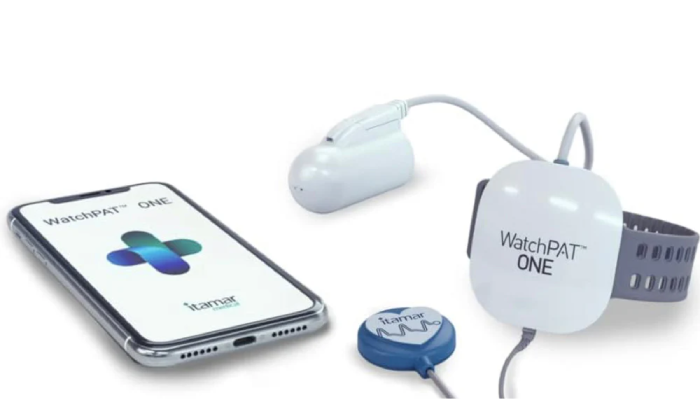
The HSAT device is small, lightweight, and easy to wear. While kits may vary slightly, most include:
- Breathing Sensor (Nasal Cannula): A small tube placed under your nose to track airflow.
- Oximeter (Finger Sensor): A clip-like device that measures oxygen saturation and heart rate.
- Chest Belt or Sensor: A strap around your chest or abdomen to track breathing effort and movement.
- Recording Device: A portable monitor that collects all the data overnight.
Unlike a full sleep study, HSAT does not usually require brain wave sensors or electrodes.
Step 3: During the Test
Here’s what actually happens when you use the home sleep apnea test:
- Device Setup – Before going to bed, you attach the sensors as per the instructions. Most devices have indicator lights to confirm everything is connected properly.
- Sleep Naturally – Once the device is recording, you simply go to sleep as you normally would. The device works silently in the background.
- Data Collection – Throughout the night, the sensors measure:
- Breathing pauses and irregularities
- Oxygen levels dropping during apnea events
- Heart rate changes
- Chest and abdominal movement (to check breathing effort)
- Breathing pauses and irregularities
The test typically runs for 6–8 hours, ensuring enough sleep data is recorded.
Step 4: Finishing the Test
In the morning:
- Remove the sensors and turn off the device.
- Return the device to the clinic (or follow shipping instructions, if it was mailed to you).
The recorded data is then downloaded and reviewed by sleep specialists.
Step 5: After the Test – Getting Your Results
A sleep physician will analyze the data collected by your home sleep apnea test. The results will show:
- Apnea-Hypopnea Index (AHI): The average number of times breathing stops or slows per hour.
- Oxygen Desaturation: How low your oxygen levels dropped during the night.
- Heart Rate Variations: Correlation between breathing issues and heart activity.
Based on these results, your doctor will confirm whether you have sleep apnea and determine its severity (mild, moderate, or severe).
What Happens If You Are Diagnosed with Sleep Apnea?
If your results show sleep apnea, the next step is treatment. Common options include:
- CPAP Therapy (Continuous Positive Airway Pressure): A machine that keeps your airways open during sleep.
- Lifestyle Changes: Weight loss, avoiding alcohol, and changing sleep position.
- Oral Appliances: Custom-fitted devices that help keep airways open.
- Surgery (in rare cases): For patients with structural airway problems.
Your doctor will create a personalized treatment plan based on your diagnosis.
Benefits of a Home Sleep Apnea Test
- Comfortable: Done in your own bed instead of a clinic.
- Convenient: No overnight hospital stay required.
- Affordable: Usually less expensive than lab-based studies.
- Quick Results: Faster diagnosis and treatment planning.
Limitations of a Home Sleep Apnea Test
While highly effective, HSAT does have some limitations:
- It may not detect central sleep apnea or other sleep disorders.
- If the device is not used correctly, results can be inaccurate.
- Inconclusive results may require a full lab sleep study.
Conclusion
A home sleep apnea test is a safe, simple, and effective way to diagnose obstructive sleep apnea without the hassle of a sleep lab visit. By monitoring your breathing, oxygen levels, and heart rate overnight, the test provides valuable insights into your sleep health.
If you are experiencing symptoms like loud snoring, choking at night, or extreme fatigue during the day, talk to your doctor about whether a home sleep apnea test is right for you. Early diagnosis and treatment can greatly improve your sleep quality—and your overall health.

James Scott was born in Missouri and studied at the University of Central Missouri. Currently working as Manager at ActoutLoud, James Scott helps readers learn the fields of Law, Marketing, Construction, Education, Health, etc hone their skills, and find their unique voice so they can stand out from the crowd.
How to Cite This Article
James Scott. "What Happens During A Home Sleep Apnea Test?." Act Out Loud, June 17, 2025. https://actoutloud.org/what-happens-during-a-home-sleep-apnea-test/